
Influencers: obligations and responsibilities in Europe
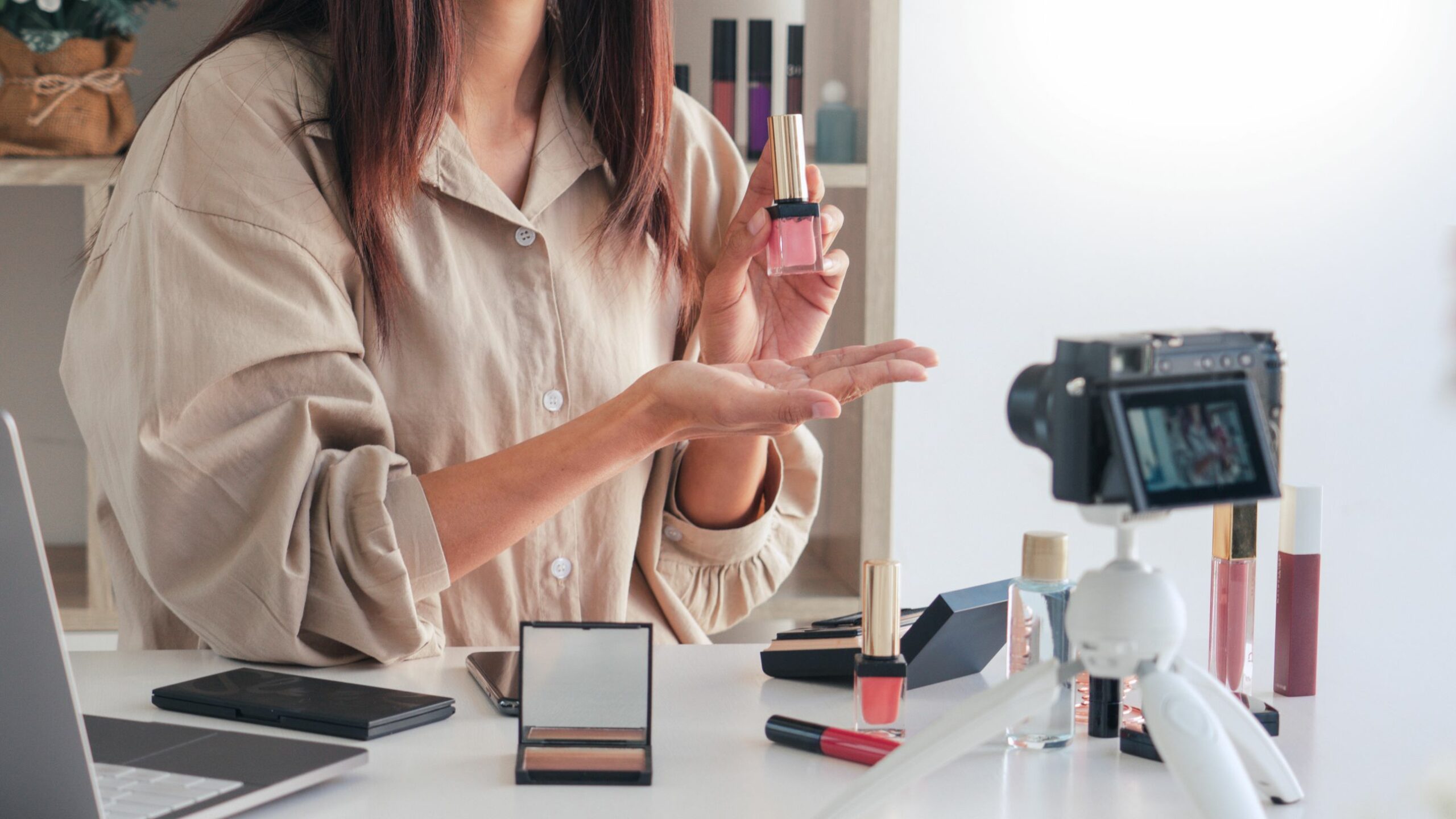
Increasingly prevalent on social media platforms are influencers who test, praise and promote products. They all share one goal: encouraging you to buy these products. And it works! From lipsticks to teeth whiteners, from slimming products to branded clothing from all over the world, many consumers click on the link of the brand promoted by the influencer.
Despite the fact that influencers are paid or receive gifts for this activity (free stay in a hotel, clothes, beauty products…), influencers don’t always inform consumers about the paid partnership. Without a clear notice identifying the commercial nature of the promotion, consumers might be led to believe that it is a personal and spontaneous opinion.
Is this practice legal? What are the obligations of an influencer towards consumers in France? Are the rules of influencer marketing the same in other European countries? Can the influencer be held responsible in case of purchase of a non-compliant product?
Summary
- Regulation of influencers’ activities in France
- What are the obligations of influencers in France?
- What is illegal for influencers in France?
- Can influencers be held liable for non-conforming purchases or non-delivery?
- Beware of dropshipping websites!
- What are the obligations of influencers in other European Member states?
- Types of influencer marketing as well as some pitfalls
- How can influencers know about their obligations?
Regulation of influencers’ activities in France
Since 9 June 2023, a law regulates the activities of commercial influencers in France. The text defines influencers as individuals or legal entities who “for a fee, communicate to the public by electronic means content intended to promote, directly or indirectly, goods, services or any cause whatsoever”.
The new provisions apply to influencers, regardless of their location, as soon as they address a French audience. French influencers who live outside of the EU must designate a legal or natural person in Europe. This ensures the compliance of their contracts with French law and facilitates the response to requests from the authorities.
What are the obligations of influencers in France?
In France, according to the law n° 2023-451 of 9 June 2023 aimed at regulating commercial influence and combating abuses by influencers on social networks and the transposition of the directive 2005/29/CE on unfair commercial practices, influencers must specify that their communication results from a partnership with a brand or a trader and that they are paid to promote the products they present. All promotional content must include the words “advertising” or “commercial collaboration”.
This mention can be made orally, in a text or via the features integrated in the social networks (links). If the influencer mentions the partnership orally, in a video for example, he/she must specify it again in his/her description in the first three hashtags associated with the post.
Examples : #sponsored ; #partnership
What is illegal for influencers in France?
Influencers in France must not undermine human dignity: they must not offend the sensibilities of their audience, they must not devalue another person based on physical, radical or religious criteria, they must not trivialise violence, etc. If the promoted content is aimed at children or teenagers, they must be informed that parental authorisation will be required. Influencers must also not commit acts of unfair competition, i.e. denigrate the products or services of a competing brand or of another influencer.
Additionally, influencers in France are forbidden to promote certain types of products, for instance:
- Plastic surgery and aesthetic medicine (including any action, intervention, procedure, technique and method)
- Products, actions, procedures, techniques and methods that are presented as comparable, preferable or substitutable to therapy
- Financial products and services (particularly crypto assets)
- Gambling (advertising to minors is prohibited)
- Products containing nicotine (electronic cigarettes, “IQOS” type heated tobacco devices)
- Subscriptions to sport coaching or sport forecasts
If an influencer based abroad advertises products or services from the list above, their content will be blocked for violation of the French law.
By legislating on authorised and non-authorised practices, French authorities want to put an end to deceptive commercial manipulations and better protect consumers who watch this promotional content, especially the young audience.
For instance, the French Directorate General for Competition Policy, Consumer Affairs and Fraud Control takes action against influencers who advertise products with an alleged health claim without any scientific proof supporting their efficiency.
Can influencers be held liable for non-conforming purchases or non-delivery?
Influencers who present the products or services of a partner brand on social networks do not force you to buy them. They are also not salespersons since by clicking on the link they share with you, you are generally redirected directly to the brand’s website or social network page and it is there that you can buy the product or subscribe to the service.
Thus, influencers cannot be held responsible directly, if there is a problem with your order. If you did not receive your order or you received a defective product, you must contact the seller who is responsible for your order.
Your only recourse against an influencer who has promoted a defective product or a fraudulent website is to file a legal procedure for unfair or misleading commercial practice on the basis of the 2005/29/EC directive transposed in each EU country.
Beware! Some influencers have created their own brand (e.g. jewellery, clothes or makeup) and therefore their company. In case of a problem when ordering on their website or with the product, this company mentioned in the legal notice of the website is responsible because it is your seller. Tip: contact the customer service rather than the influencer via their social networks.
Beware of dropshipping websites!
Many influencers praise the products sold on websites that practice dropshipping. Be careful not to fall into the trap! Don’t order without checking the trustworthiness of the seller. Don’t hesitate to compare prices with other sites.
Since 9 June 2023, French influencers can be held responsible when their followers buy products that they have marketed, even if the supplier carried out the delivery. Influencers must provide information the supplier’s identity, along with information about the product, and make sure that the product is available and legal (not counterfeit).
What are the obligations of influencers in other European Member states?
The Directive 2000/31/EC on Electronic Commerce (art. 6) as well as the Directive (EU) 2018/1808 “Audiovisual Media Services” require all influencers in Europe to mention their commercial partnership as well as the company for which this communication is made. This information and a transparency obligation are applicable in every EU Member state.
However, apart from a “Good Practice Guide on Online Advertising” published by the OECD in 2019 to protect consumers in e-commerce and the “communications code on advertising and marketing” from the International chamber of commerce, there is no European regulation on influencer marketing to date.
In Europe, two pieces of legislation have been voted to overhaul digital business practices in the EU and increase accountability and fairness online: the Digital Markets Act and the Digital Services Act.
Under the Digital Services Act, influencers, as content creators, have to accept greater responsibility for the content they post online. They also must ensure that their content is appropriate and not misleading or illegal.
As for online social media platforms that host influencers’ content, they must be clearer and more transparent about how their content algorithms work. They must have a button allowing users to report illegal content published by an influencer, and react rapidly after a report. Finally, they are obliged to monitor posts themselves and remove them if necessary or even suspend accounts.
In 2022, the European Commission has launched a public consultation on the subjects of influence marketing and dark patterns. The aim is twofold: to carry out a fitness check to determine whether European consumer law is still adapted to the challenges of the digital world, and to lay the foundations for a Digital Fairness Act. This new regulation should come in the next few years.
While waiting for a European harmonisation, the rules vary from one country to another. Here is an overview by country.
The Austrian Media Act and the Code of Ethics of the Austrian Advertising Council require the influencer to state clearly and comprehensibly that it is an advertisement.
The Austrian Advertising Council has created a website to enable influencers to check whether their message should be considered as an advertisement or not.
In Belgium the trader who pays influencers to promote products on social media need to ensure that they clearly mention that this is an advertisement.
Also Flemish media service providers need to make commercial communications recognisable as such. According to the Flemish Minister for Media, influencers who earn income from commercial communication should be considered as media service providers.
The Belgian Advertising Council and FeWeb have published recommendations on online influencer marketing to help influencers comply with the legislation and better protect consumers. The Jury for Ethical Advertising Practices monitors compliance with these rules by giving preventive advice and taking non-binding decisions following complaints.
But these guidelines only apply to influencers who receive compensation (monetary or in-kind) for their advertising and only if that advertising is controlled by a professional, a brand that gives clear instructions to the influencer on how to advertise its product. According to the guidelines, these influencers must mention the word “advertising” or “sponsorship” in their advertisements in a way that is understandable to the average consumer they are addressing. The use of a hashtag is one possible way to do this. It is also recommended that the logo or brand of the professional for whom the influencer is promoting is clearly mentioned, to make it clear that this is a commercial message. It is the influencer, not the marketer, who is responsible for following these recommendations.
There is no specific legislation for influencers in Bulgaria. They have to comply with all the rules on advertising, unfair and deceptive marketing practices.
The National Council for Self-Regulation (NCSR), a non-commercial association of public utility, has published ethical rules for advertising and commercial communications in Bulgaria which also apply to influencers or bloggers. The full set of rules is available in English here
In Cyprus, there is no legal basis for influencers. But brands are advised to be careful in their selection of influencers to promote their product or service.
In Finland the commercial cooperation between companies and influencers should be communicated to consumers in targeted influencer marketing in accordance with the Consumer Protection Act and influencers are required to clearly inform the consumer of the commercial nature of their marketing. In 2019, the Finnish Consumer Ombudsman issued a guideline for influencer marketing in social media.
The Finnish Consumer Ombudsman has also published guidelines on how sponsored content should be mentioned in social media.
In France, according to art. 20 of law n°2004-575 of 21/06/2004 for confidence in the digital economy and the transposition of directive 2005/29/EC on unfair commercial practices, influencers must specify that their communication results from a partnership with a brand or a professional and that they are paid to promote the products they present.
This can be done verbally, in a text or via the integrated features of social networks (links). If the influencer mentions the partnership orally, in a video for example, he/she must specify it again in his/her description in the first three hashtags associated with the post, this can be done via hashtags for example #sponsored; #partnership
Influencers in France must not undermine human dignity: they must not offend the sensibilities of their audience, they must not devalue another person based on physical, radical or religious criteria, they must not trivialise violence, etc. If the content being promoted is aimed at children or adolescents under the age of majority, they should be informed that parental permission will be required. Influencers should also not engage in unfair competition, i.e., disparaging the products or services of a competing brand or another influencer.
In Germany influencers who sell goods, offer services or market their own image using social media such as Instagram are running a business.
Promotional posts should be clearly identified. Any reference to a brand or product is considered an advertisement if there has been an agreement between the brand/vendor and the influencer and the influencer receives compensation (remuneration or benefit in kind). The advertisement must then mention the term “Werbung” or “Anzeige” at the beginning of the post or video (+ in its description). However, courts have ruled that the labels “#sponsored by” or “#ad” are not sufficient. It is also not sufficient that the advertising nature of the post becomes only apparent upon closer inspection. Rather, it must be obvious to an average user at first glance that the post in question is advertising.
However, the post must be excessively promotional by promoting the product uncritically and beyond factual information in order to be considered as advertising. The BGH (German High Court) has ruled, for example, that influencers are allowed to refer to companies on the internet using features built into social networks (such as “tags” in photos on Instagram, which redirect users to manufacturers’ or brands’ profiles), without this being considered as advertising. If, on the other hand, the influencer links directly to the brand’s website or Instagram account, this would be advertising.
In Ireland, Marketing of all types in Ireland is currently regulated by the Consumer Protection Act 2007, which prohibits “misleading, aggressive or unfair commercial practices” and now by the Consumer Bill 2022. The new Consumer Rights Bill, Part 9 provides that consumers harmed by unfair commercial practices will have access to effective remedies, including compensation for damage suffered by the consumer and, where relevant, a price reduction or the termination of the contract.
In Ireland, a 2021 survey by the Advertising Standards Authority Ireland (the marketing regulator)) found 51% of surveyed Irish consumers were concerned by the lack of transparency in influencer marketing. They have the following guidelines.
In Italy, there is no specific legislation on influencer marketing, but influencers, bloggers, celebrities, etc. must indicate that their publication is promotional (Directive 2005/29/EC and Italian Consumer Code (transparency principle)). They must mention this at the beginning of the post, in the first hashtags, or in an associated message (#Pubblicità / #Sponsorizzato da / “prodotto inviato da” (product sent by). The Italian advertising standardisation authority “Digital chart regulation” also stipulates that commercial communication must clearly show its promotional objective in the case of product reviews or endorsements, videos, invitations to events, advertising games, etc.
The Lithuanian Law on Advertising stipulates that surreptitious advertising is prohibited. Advertising must be clearly identifiable. If consumers are not able to identify the advertisement broadcast in the media, this advertisement must be marked with the word ‘advertising’.
If the influencer only receives a free item or service in exchange for being mentioned online, he/she should mention this and use the hashtag #gifted (or #dovana in Lithuanian). If monetary compensation has been received or a long-term partnership has been established, the influencer should indicate that it is an advertisement for a product with the hashtags #ad (or #reklama in Lithuanian).
In 2019, the Consumer Rights Protection Authority in Lithuania (SCRPA) carried out a check on influencer marketing, it was found that only some of them clearly indicated that they had received some form of monetary payment, a product or service for free, a commission… Thus, in December 2019, guidelines on social media advertising were published.
In Luxembourg, there is no specific legislation for influencers. They have to comply with all the legislation on advertising. ALIA (Autorité Luxembourgeoise Indépendante de l’Audiovisuel | ALIA) is responsible for monitoring the application of the rules relating to audio-visual services and the media and has the power to impose sanctions.
In Malta, there is no specific legislation governing influencer marketing. The rules are the same as those that apply to advertising and marketing, namely the Unfair Commercial Practices Regulation (transposition of the Unfair Commercial Practices Directive 2005/29/EC), incorporated in Part VIII of the Consumer Affairs Act.
The local Maltese authority is in the process of preparing guidelines to the influencer marketing industry on how and when to disclose commercial practices. The scope of these guidelines will be that of facilitating the industry’s compliance with the relevant rules.
In the Netherlands, influencers are obliged to indicate the advertisement. All forms of advertising on social media are covered by the “Stichting Reclame” code. In addition, the Dutch Media Authority, which controls advertisements on traditional media, also regulates influencers on social networks on the basis of the Dutch Media Act (transposition of Directive 2018/1808).
Influencers must inform the consumer whenever they receive a payment or a gift for promoting a good or service.
Portuguese law considers any communication with a commercial relationship (with monetary or in-kind payment) to be advertising. The same applies when the publication promotes specific products or services through links or a promotional code.
The “Direção-Geral do Consumidor”, the Portuguese advertising authority, has published a guide for influencers in 2019, a best practice guide for digital marketing. The guide is now available in a bilingual version (PT and EN)
In Spain, it is an illegal practice to conceal a partnership. There is a Code of Conduct for influencers who advertise, which states that all content (graphic or audio-visual) generated by partners or adherents to the Code is considered advertising content subject to control by the Spanish authority “Autocontrol”, if it promotes products or services in the context of a commercial partnership (editorial control of the brand over the content) with compensation (payment or free delivery of a product, free entry to an event, gift vouchers, trips, etc.).
Also, the advertising nature of influencers’ comments or the digital content they disseminate must always be properly identified to their followers/potential consumers. If the nature of the advertising is not clear and obvious, they should supplement their posts with mentions such as “#advertising”, “#advertisement”, “#Brand ambassador”, “#Thank you to [brand]”, “Gift from [brand]”, “Sponsored travel”, etc.
There is also an ex-post control mechanism which allows complaints about breaches of the code to be made to the Autocontrol advertising panel (which is an ombudsman body).
The Swedish Consumer Agency did a review of influencers obligations and responsibilities in social media in 2020-2021. Inadequate influencer marketing was the consistent impression after the review. The Swedish Consumer Agency has produced a guide to help those who blog or write in other social medias to do the right thing when it comes to marketing, and also how to follow the law. More information can be found in Swedish here.
Types of influencer marketing as well as some pitfalls
Through their strong presence in social networks, influencers are valued and their opinions are considered important and trustworthy. In this way, they have a targeted influence on the opinions, purchasing decisions and interests of their subscribers and consumers. And it is precisely this direct access to specific groups of people that companies value in influencer marketing.
Look out for the following problematic commercial practices.
- Insufficiently labelled advertising: Whenever there is a business relationship between the influencer and the advertiser, that relationship must always be clearly and unambiguously identified at the beginning of the publication. The advertising can either be for a third-party company (a product, service or brand) or for the influencer’s own company
- Micro-influencers are not monitored or regulated. There are reward systems in place encouraging product reviews or social media posts in exchange for free product provision by the traders. Many consumers are acting unconsciously as micro-influencers.
- Inflated prices: Some companies exploit the popularity of influencers to offer products at inflated prices.
- Dropshipping: Many influencers run their own online shops. Dropshipping is becoming increasingly popular as a business model. While dropshipping websites usually inform more or less correctly about delivery times, they generally do not inform consumers when they are out of stock of an item. Consumers can only guess if their seller is a dropshipper when looking at the address they are supposed to send items back in case of withdrawal.
- Purchased subscribers and followers: Some influencers try to improve their image by buying subscribers or followers. These can be real people or bots (computer programmes). The aim is to appear more trustworthy in order to gain more subscribers and thus potential customers.
- Retargeting: If, for example, the target group regularly visits an influencer page on the topic of “Dublin”, the users will suddenly receive advertisements from various companies such as hotel chains or airlines on the topic of “travelling to Dublin”. This is intended to encourage consumers to make a hotel booking, for example.
- Manipulative design of the user interface: social proof is one of the many forms of dark patterns.
- Sponsoring: the name of the company should explicitly be mentioned in the post. This type of influencer marketing is often found on Instagram.
- Product placement: With this marketing technique, which is mainly found on YouTube, the product or service is indirectly integrated into the event. Although the product is not the focus, it still plays a noticeable role. The subscriber’s attention is thus drawn to it rather casually.
- Unboxing: Some influencers film themselves unboxing products from well-known brands or sellers and publish the post on social media channels. Many people watch unboxing videos because they are interested in the product and want to see it before they buy it. Unboxing videos are mainly found on Instagram and YouTube. If influencers receive a service in return, the post must be marked as advertising.
- Takeover: influencers take over a company’s social media channel for a certain period of time. The goal of the company is to use the level of awareness of the influencers to reach a specific target group in a contemporary way. This marketing technique, which is often used on Instagram, is combined with classic print, TV or radio advertising.
- Financial/investment advice: a whole sector of influencers essentially build their brand around giving financial advice to their viewers. This type of activity raises many concerns, i.e. the transparency and quality of advice and the risk of abuse. Moreover, it is also problematic that some influencers direct their advice to consumers from a country in which the exercise of the profession of financial investment advisor is subject to prior authorisation/certification. Publications regarding consumer loans, health allegations, alcoholic beverages and publications targeting minors must comply with legal restrictions applied to this kind of advertisement.
- Influencers who mainly target youngsters (12-16 years old followers) often promote products which are forbidden to minors under 18 (e.g. e-cigarettes and vaping devices) or fake products. Stay vigilant.
Funded by the European Union. Views and opinions expressed are however those of the author(s) only and do not necessarily reflect those of the European Union or the European Innovation Council and Small and Medium-sized Enterprises Executive Agency (EISMEA). Neither the European Union nor the granting authority can be held responsible for them.
Was this article helpful?